
Home / Insights / The Clean Sweep
The Clean Sweep · Weekly janitorial insightsThe dirtiest spots in your facility, and why they keep getting missed
Ask most people where the germiest spot in a building is and they will point at the restroom. It is the obvious guess. It is also, according to actual workplace hygiene research, usually wrong.

One of the most detailed studies ever done on workplace hotspots swabbed nearly 5,000 surfaces across offices and manufacturing facilities. The dirtiest readings in the entire building did not come from the restroom. They came from the break room. Sink faucets, microwave door handles, and coffee stations consistently tested worse than restroom surfaces, because everyone assumes someone else is wiping them down, and almost nobody actually is.
That pattern holds true across a lot more than break rooms. In large industrial and manufacturing facilities, the spots that actually accumulate the most grime, dust, and buildup are rarely the ones anyone thinks to check. Here are eight of the worst offenders, and why they keep getting missed.
01The break room, specifically the faucet and the microwave handle
Start with the one the research actually backs up. Break room surfaces get touched by nearly every employee in the building, multiple times a day, and cleaned far less often than anyone assumes. In the same workplace hygiene study, more than 90 percent of break room sink faucets tested were rated as needing better cleaning. The microwave door handle is not far behind. Everyone touches it right before they eat.
02Behind and under heavy equipment
Production machinery rarely gets moved, which means the floor underneath and behind it rarely gets touched either. Dust, oil residue, and debris quietly build up in a spot that is technically part of the facility but functionally invisible to a standard cleaning pass. On an audit walk, this is one of the first places an inspector's eyes go, precisely because they know it is usually skipped.
03High dusting zones
Overhead pipes, ductwork, the tops of racking and shelving, light fixtures, sprinkler heads. Nobody looks up during a normal shift, which means dust has months, sometimes years, to accumulate undisturbed. That is not just a cosmetic problem. Dust buildup near sprinkler heads can interfere with fire suppression clearance, and in some industrial environments accumulated dust is a genuine combustion risk. High dusting is not glamorous work, but it is one of the more serious gaps on this whole list.

04HVAC vent returns and intake grilles
Every bit of air in a facility eventually passes through these. Every bit of dust in the building does too, and a lot of it settles right at the grille instead of making it through. A clogged, dust-caked return does not just look bad, it is recirculating whatever it is caked with, and forcing the whole HVAC system to work harder while it does.
05Wall-floor junctions and under pallet racking
Automatic floor scrubbers are great at wide open spaces and genuinely bad at tight corners. Anywhere a wall meets a floor, or a floor disappears under low pallet racking, is a spot the machine physically cannot reach. Debris just collects there, quietly, for as long as nobody gets down and handles it manually.

06Door push plates, handles, and keypad buttons
Every entrance, every stairwell, every badge-access door in a large facility has one of these, and employees touch them dozens of times a day without a second thought. They are high-touch, low-visibility, and almost never on a standard daily checklist, even though they are one of the most direct paths for anything to spread facility-wide.
07Loading dock areas and dock plates
This is where the outside world meets the inside of your building, literally. Dock plates take a daily beating from tires, boots, and whatever was on the truck, and dock areas in general tend to sit low on the priority list because they do not look like the inside of the building the way an office or break room does.
08The cleaning equipment itself
Here is the twist nobody expects. Mop buckets, scrub machine reservoirs, and wringer systems are supposed to be cleaning your facility, but if they are not maintained and changed out properly, they turn into the thing doing the contaminating. A mop head that has not been changed in weeks is not cleaning a floor, it is redistributing whatever it picked up three rooms ago. The tool meant to solve the problem quietly becomes one of the eight spots on this list.

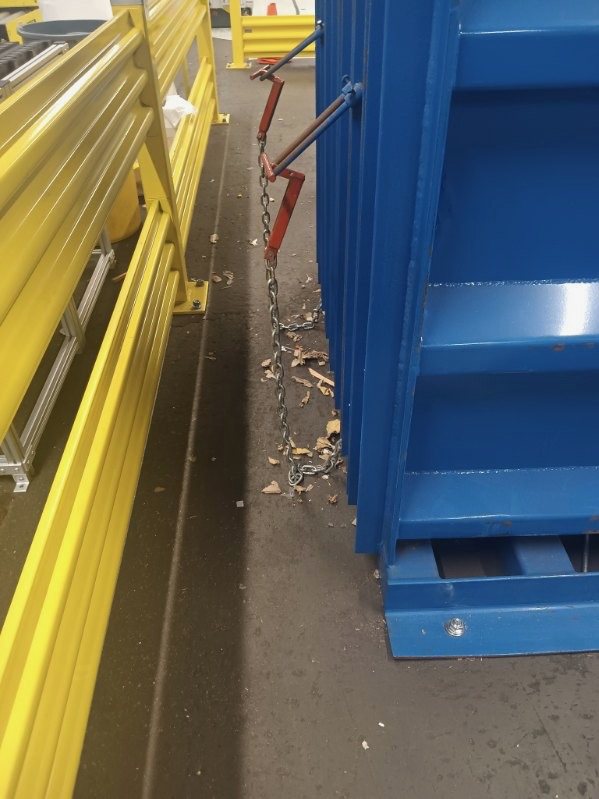
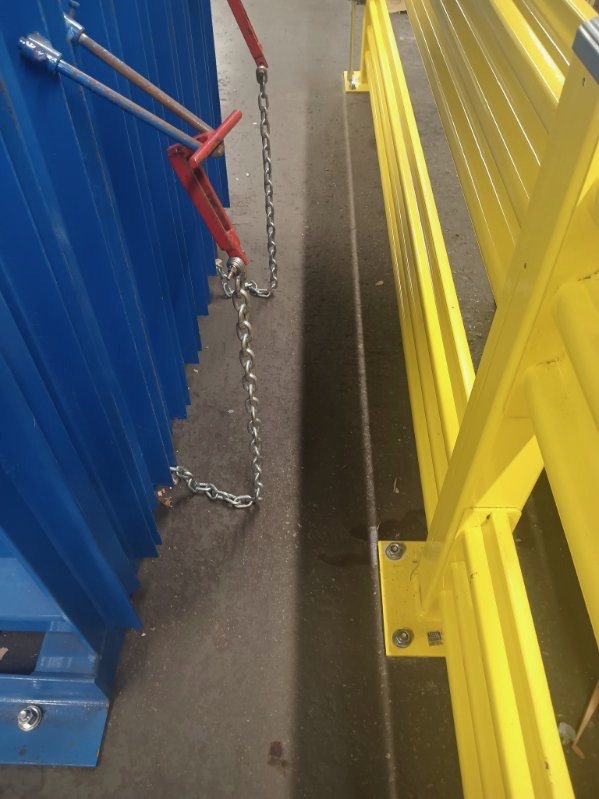
Number five on this list, in a real building. Debris collecting in the wall-floor junction beside racking, exactly where a ride-on scrubber cannot reach. Nothing here is hard to clean. It just has to be somebody's job.
Why these spots keep getting missed
None of this is because crews are lazy. It is because a generic cleaning checklist covers what is easy to see, and every spot on this list is specifically the kind of thing that is not. Nobody is walking behind the machinery on a regular basis to check. Nobody is assigned to look up at the sprinkler heads. Without someone actually accountable for the whole facility, not just the visible parts of it, these spots simply do not make the list.
That is the actual argument for having a dedicated on-site manager instead of an unmanaged crew that shows up, runs a standard route, and leaves.
At HM Solutions, every facility we run has a manager whose job is that specific building, not a route across ten buildings. Scope of work gets built around your facility's actual problem spots, the ones on this list included, not a generic template. Quality gets checked through documented, photo-based inspections, so behind the machinery and on top of the racking are actually items someone is accountable for, not places that fall through the cracks because nobody was looking.
About The Clean Sweep
Weekly janitorial insights from HM Solutions, Inc. We run large-scale contract cleaning in facilities across the United States, and we write about what we actually find in them. No sales pitch, no fluff, just what tends to go wrong in big buildings and what to do about it.
Request a facility walk or call (864) 605-7016.
 Follow HM Solutions on LinkedInNew issues land in your feed first.
The Clean Sweep
Get it in your inbox, once a month.
What actually goes wrong in large facilities, what auditors look for, and what it costs. Written from plant floors and distribution centers, not from a marketing desk.
One email a month. No sales pitches, unsubscribe anytime. Or read it on the subscribe page.
Next step
Let us walk your facility.
No cost, no obligation. We take the time your building needs, from a quick look to a full walkthrough of a large site, give you an honest read, and tell you what we would do differently. Whether you hire us this year or three years from now, you learn something either way.